When you need an AI bot
- Instagram comments and Direct get dozens or hundreds of questions a day.
- Most questions repeat: price, size, color, delivery.
- Customers write in the evening and on weekends but get answers the next day.
- Sales reps can’t keep up, and leads are lost.
How the bot works
A modern AI bot combines a language model with the business’s knowledge base. The catalog, prices and FAQ are stored as vectors. When a customer asks a question, the bot first finds the most relevant passages in that base, then the model writes an answer based on them. This approach is called RAG, and it stops the bot from “inventing” prices or products.
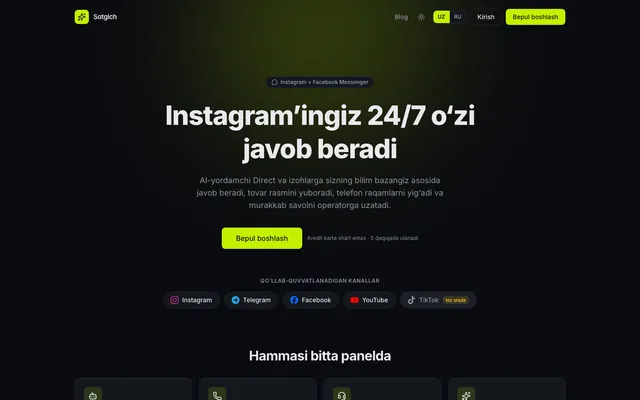
That’s how our Sotgich service works: it replies to an Instagram comment, continues the conversation in Direct, asks for a phone number and sends the lead to the dashboard.
What you need before launch
- A set of real questions: Direct and Telegram conversations from recent months.
- A structured knowledge base: products, prices, delivery and return rules.
- Topics the bot must not answer and a rule for handing over to a person.
- Testing: checking answers on real questions and filling gaps in the base.
- Monitoring: a weekly review of wrong answers and unanswered questions.
Security and privacy
API keys and customer data are stored only on the server — never in mobile app or browser code. If the data must not leave your infrastructure, the bot can run on a local model on your own server.
Telegram bot vs AI bot
A regular Telegram bot works with buttons and a pre-written script: orders, payments, queues, notifications. An AI bot understands free-text questions. The best results often come from combining them: the script drives the main path, and AI answers free-form questions.
Frequently asked questions
Will an AI bot replace a salesperson completely?
No. It takes over repetitive questions and collects leads, while complex negotiations and closing the deal stay with a person.
Could the bot quote a wrong price?
Not if it answers from the knowledge base and the prices there are current. That’s why the process for updating the base when prices change is agreed in advance.